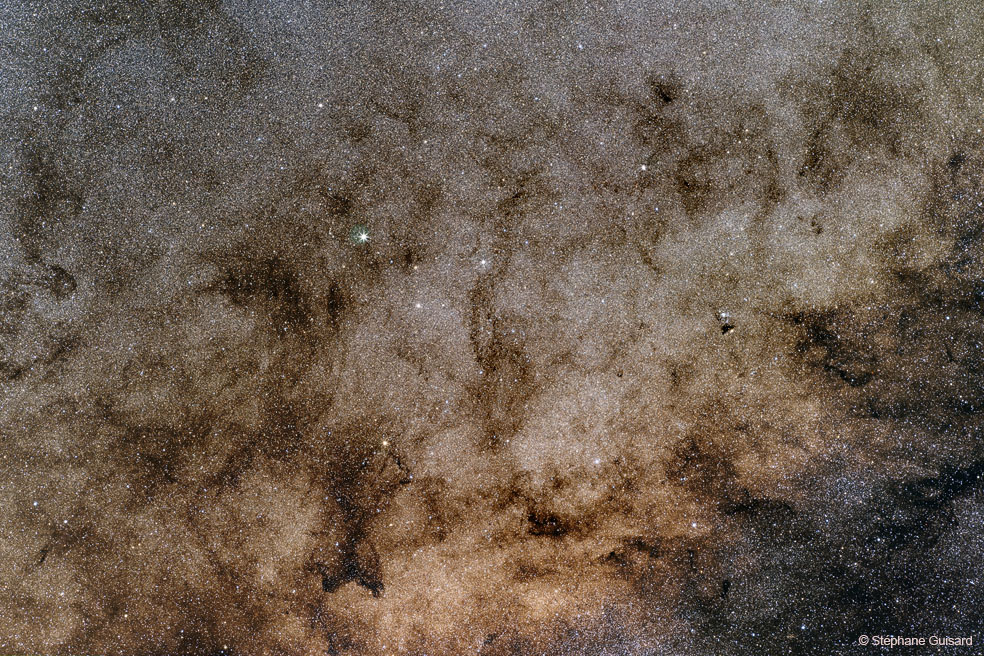
There are billions of stars in the direction of the center of the Milky Way. These stars are also billions of years old. Some are almost as old as the Galaxy. Interstellar dust combines with these stars to create this yellowish starscape. Although the dust does not let much visible light through. There is a low density hole in the dust. It is located on the right side of the photo. This area is called Baade's Window, named after the astronomer who studied it. This hole allows scientists to study stars and the internal geometry of the Galaxy.
Friday, December 21, 2007
Friday, December 14, 2007
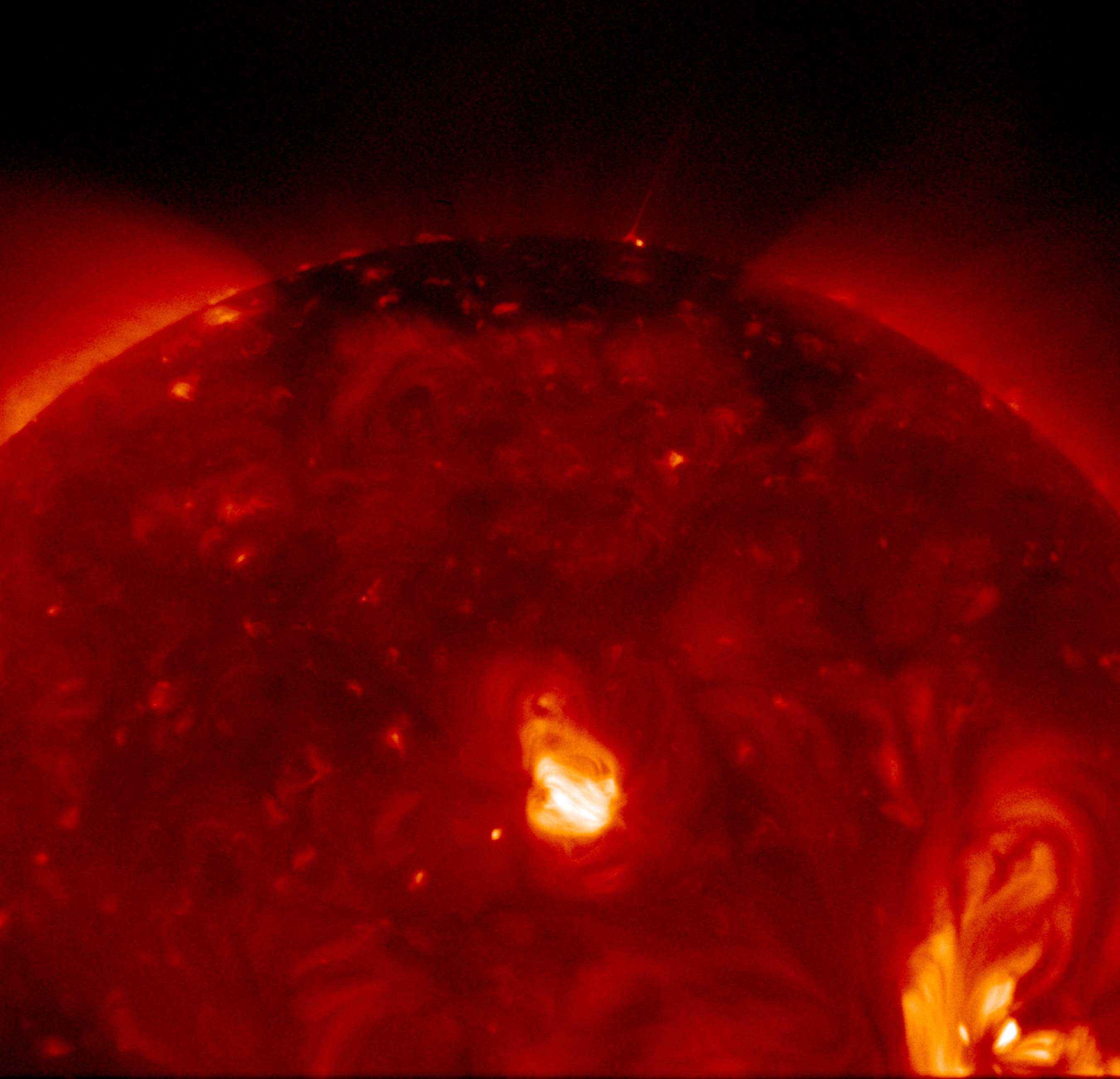
2.7: A Jet from the Sun
Saturday, December 8, 2007
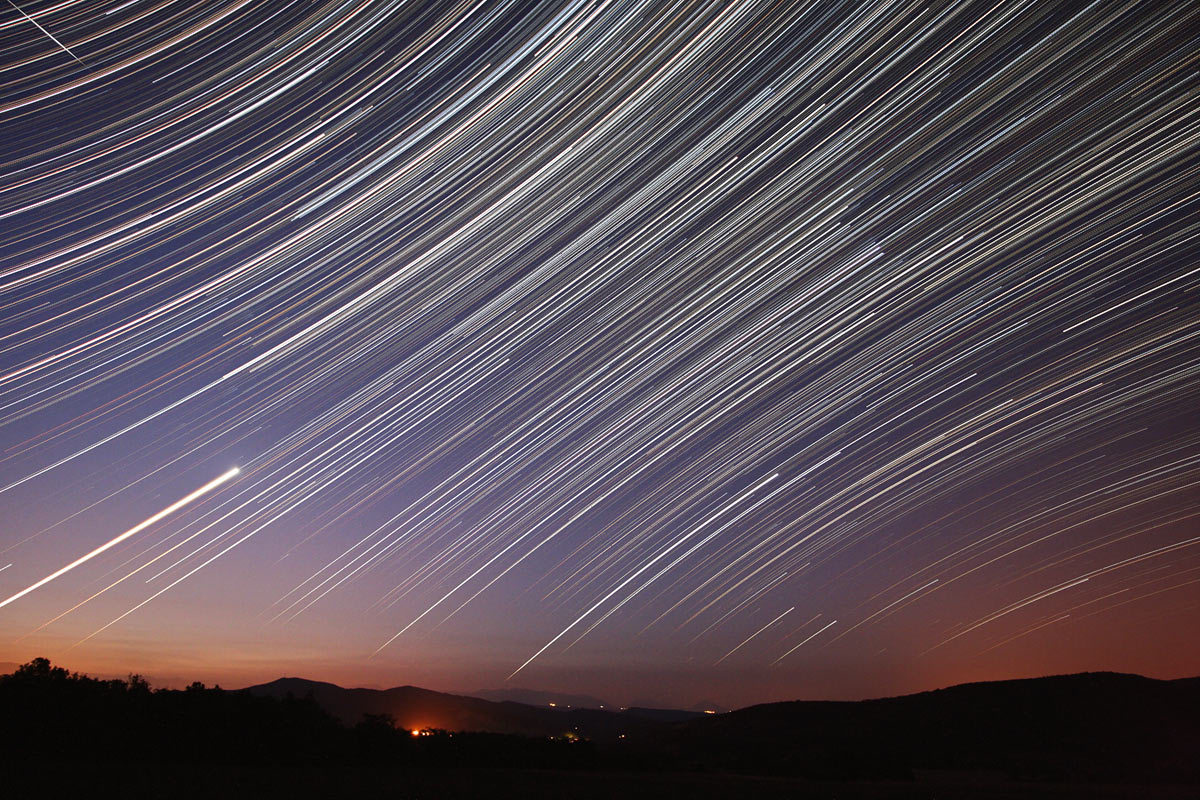
2.6: Star Trails at Dawn
This picture was created as the Earth rotated on its axis. Over a period of time the camera to picked up the trails of the stars. The striaghtish lines show the stars close to clestial equator. Orion, Sirius, and Venus are three objects found in the picutre. This photo was taken by combining 477 consecutive 30 second digital exposures recorded over 4.3 hours.
Friday, November 30, 2007
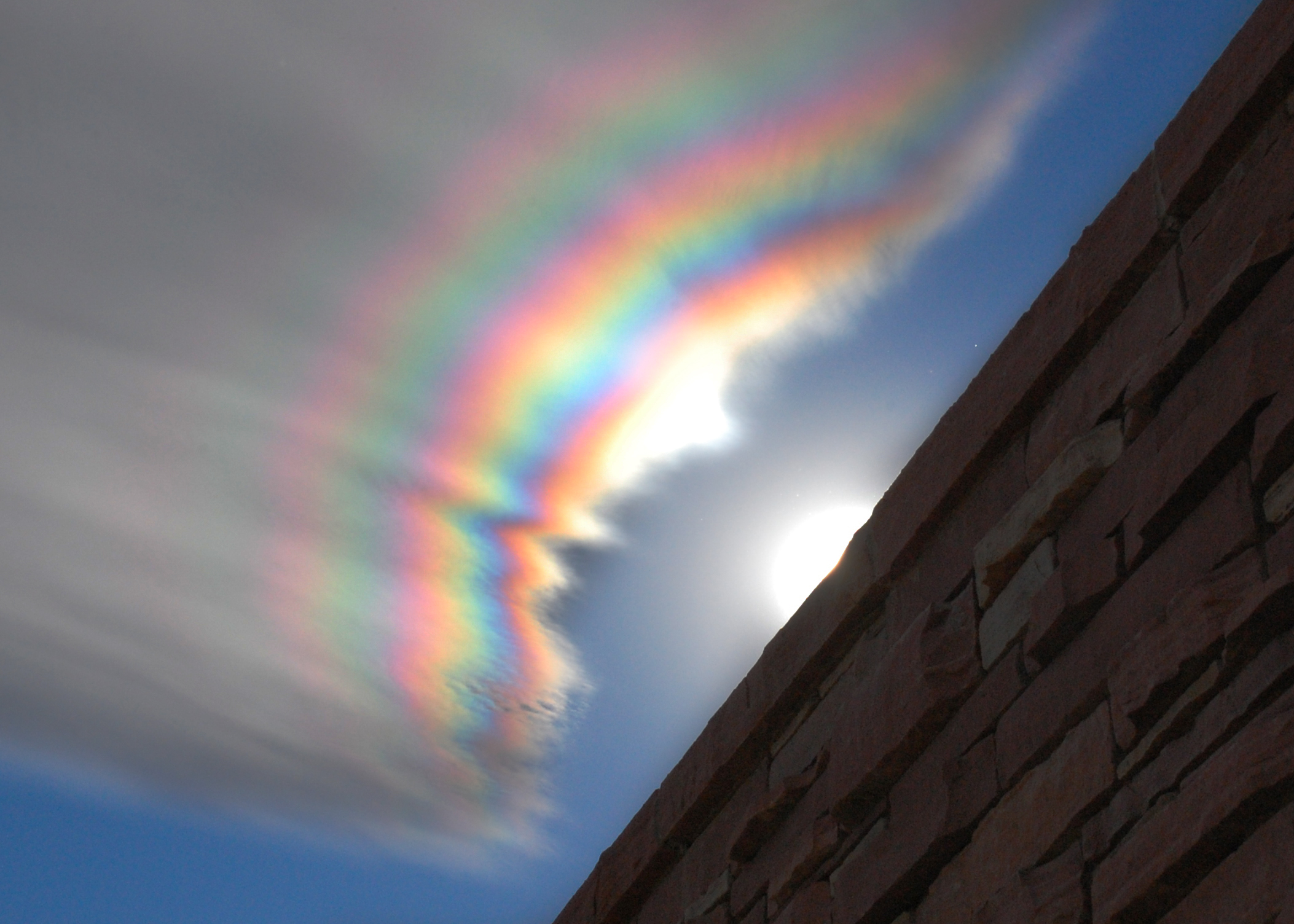
2.5: An Iridescent Cloud Over Colorado
This photo is of an iridescent cloud. When parts of a cloud are thin and are made of small water droplets, diffraction causes them to show the whole spectrum of colors. The water droplets in the cloud are small and about the same size. The sun needs to be behind thick clouds, and the droplets of the thin cloudsc coherently diffract the incoming light. Many clouds originate with a region made of uniform, small water droplets; however, these clouds become to thick or too far away from the sun to show brilliant colors.
Friday, November 16, 2007
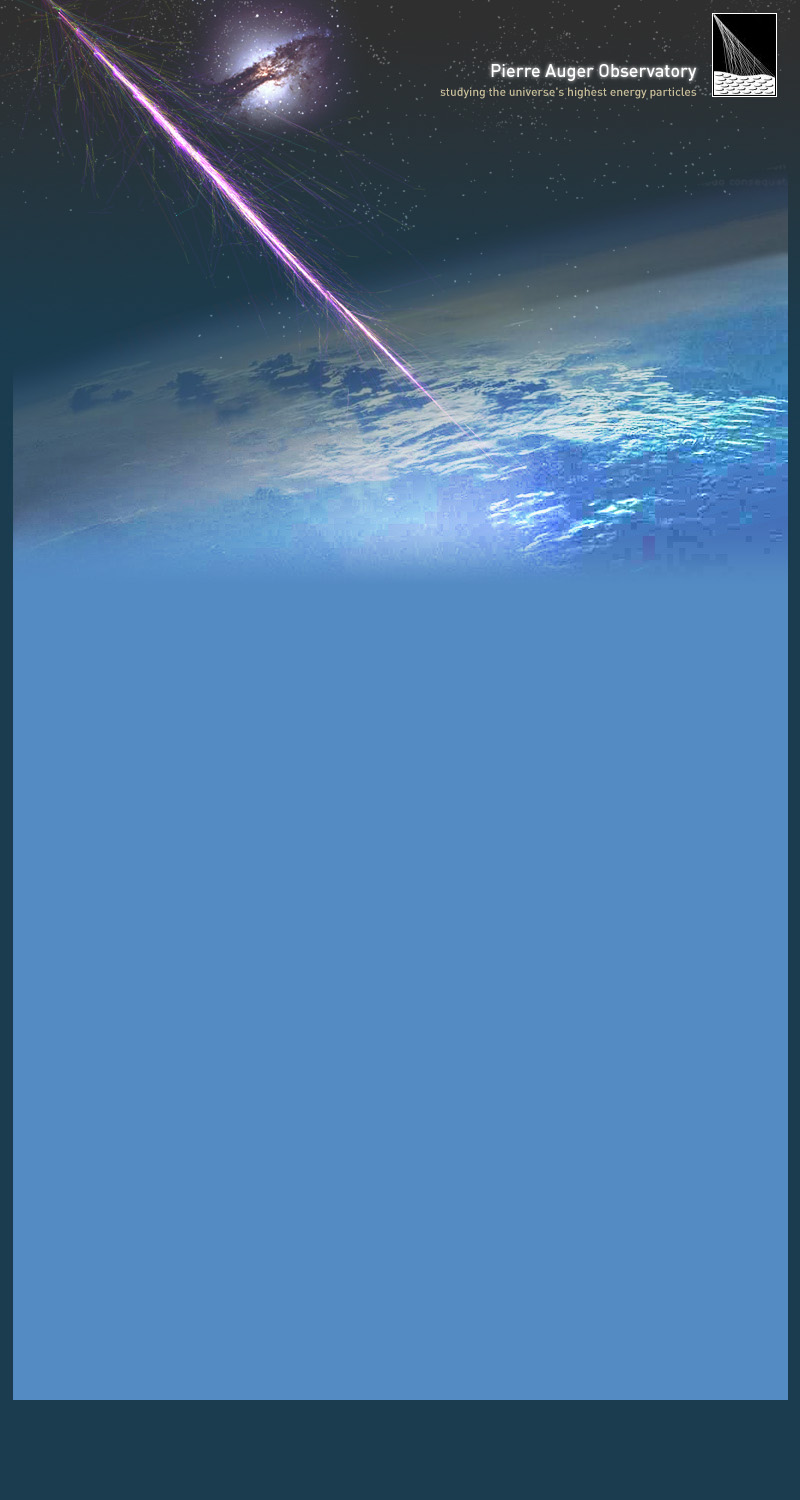
2.4: Cosmic Rays from Galactic Centers
Cosmic rays are energetic particles that originate in space and impact the Earth's atmosphere. This picture comes from the Pierre Auger Observatory. It is the world's foremost cosmic ray observatory. These rays are made of protons, electorns, and ionized nuclei of light elements. A ultra-high-energy cosmic ray has extreme kinetic energy. Its energy is more than its rest mass and the amount of energy of other typical cosmic rays. Sometimes the energy can be greater than the Greisen-Zatsepin-Kuzmin limit.
Friday, November 9, 2007
2.3: Comet Holmes Grows a Tail
This picture is of the Comet Holmes. As the ice of the comet nucleaus evaporates, it expands into a large cloud around the comet. This atmosphere around the comet is called the coma, and Comet Holmes' coma is green. The comet has also now formed a blue ion tail. About two weeks ago, Comet Holmes unexpectidly got much brighter. It can now be seen with the unaided eye.
Friday, November 2, 2007
2.2: Noctilucent Clouds Over Sweden
These clouds are Noctilucent clouds; they are the highest clouds found in the mesoshpere. You can only see these clouds when the sun is below the hozion and the lower parts of the atmosphere are in shadow; otherwise, they are too faint to see. This picture was taken around dusk in Vallentuna, Sweden. Scientists believe these clouds are made of small ice-coated particles; however, scientists still do not know much about these types of clouds.
Subscribe to:
Posts (Atom)